
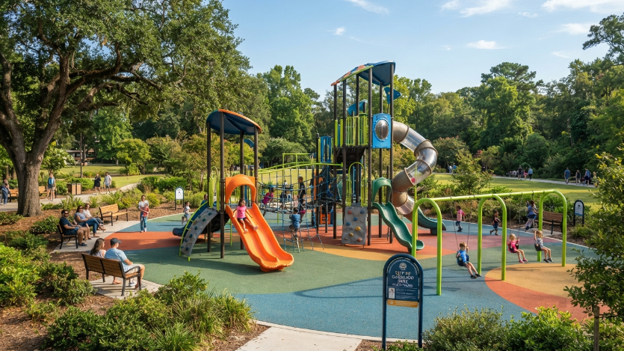
Choosing the right commercial playground equipment requires more than comparing slides, towers, and climbing frames. A successful play space reflects local needs, supports varied abilities, and remains practical throughout its service life. Therefore, strong projects begin with people, not products. They combine community insight, sound planning, responsible risk management, and meaningful play value.
Start With a Clear Community Brief
Every community has a different pattern of use. A neighbourhood park may serve toddlers, teenagers, carers, and older residents. Meanwhile, a school playground must support intense use during short breaks.
Begin by defining who will use the space. Consider age ranges, physical abilities, cultural backgrounds, visit duration, and expected attendance.
Community consultation should ask practical questions. What types of play are missing nearby? Which barriers prevent participation? When does the site feel least welcoming? These answers often reveal priorities that equipment catalogues cannot show.
However, consultation should not become a popularity contest between individual products. Instead, translate feedback into goals for accessibility, shade, social play, and challenge.
Choose Commercial Playground Equipment for Play Value
Play value describes the range, quality, and depth of experiences within a space. More equipment does not always create better play. Consequently, a smaller arrangement with varied activities may outperform a crowded site.
Look for equipment that supports several play behaviours. Strong layouts encourage climbing, balancing, swinging, spinning, sliding, role play, and quiet retreat. In addition, they let children create games without following one fixed route.
Build Graduated Challenge Into the Design
Children need manageable challenges that match developing skills. Therefore, equipment should offer several entry points and difficulty levels. A low climbing net may build confidence before a child attempts a taller structure.
Graduated challenge also supports repeat visits. Children can return, practise, and master new movements over time. As a result, the playground remains engaging beyond the first visit.
Avoid removing every sense of risk. Well-designed challenge helps children test judgement, coordination, and resilience. However, hazards with hidden or severe consequences require careful elimination.
Design for Genuine Inclusion
Inclusive design goes beyond installing one accessible item. A single ramp or basket swing cannot make an entire play space inclusive. Instead, inclusion should shape circulation, activity choices, social spaces, and supporting amenities.
Provide a continuous accessible route from parking or pathways into key play zones. Additionally, allow enough space for mobility devices beside popular activities. Transfer platforms, supportive seating, ground-level panels, and sensory features can widen participation.
Play Australia guidance supports accessible play spaces and meaningful input from children with disability and their families.
However, inclusive equipment should not isolate users from the main activity. Place accessible experiences where children can interact, cooperate, and communicate together. Social inclusion matters as much as physical access.
Consider sensory diversity as well. Some children seek movement, sound, texture, or visual stimulation. Meanwhile, others need calmer spaces with reduced noise and clear boundaries.
Match the Equipment to the Site
Great equipment can fail when it ignores local conditions. Therefore, complete a detailed site assessment before confirming the design. Review slope, soil, drainage, existing trees, utilities, access points, and surrounding land uses.
Australian heat also demands serious shade planning. Equipment surfaces, seating areas, and gathering points need protection during peak periods. Existing tree canopies may help, although roots and falling branches require assessment.
Furthermore, prevailing winds and sun angles affect comfort. Drainage patterns influence surfacing performance and maintenance. Nearby roads or water bodies may require stronger boundaries.
Use the site’s character as a design asset. Natural materials may suit bushland settings. Meanwhile, bold sculptural forms may suit civic spaces. Colours can reflect local stories or regional landscapes.
Plan Safety and Compliance From the Beginning
Safety cannot be added after the equipment layout is complete. It must guide clearances, fall zones, surfacing, installation, inspection, and ongoing maintenance.
Australian projects should consider relevant AS 4685 requirements for playground equipment and surfacing. Standards Australia describes AS 4685.0 as guidance for development, installation, inspection, maintenance, and operation.
However, compliance should not produce dull or overly cautious spaces. Good designers distinguish between beneficial challenges and unacceptable hazards. They manage foreseeable harm while preserving excitement, movement, and discovery.
Sightlines also deserve attention. Carers should supervise without following every step. Therefore, avoid unnecessary visual barriers around high-use areas.
Compare Durability and Maintenance Needs
Purchase price provides only one part of the financial picture. Instead, compare whole-of-life value across materials, finishes, warranties, replacement parts, and maintenance requirements.
Coastal locations need strong corrosion resistance. High-use schools require durable moving components and reliable fixings. Meanwhile, damp sites may need extra attention to timber treatment and drainage.
Ask suppliers how quickly replacement parts can arrive. Also confirm whether components remain available for older product ranges. A small unavailable part can close an important activity for months.
Furthermore, review inspection access before installation. Maintenance teams should reach bolts, bearings, chains, and surfacing edges without dismantling major sections.
Create a Balanced Playground Layout
A playground should feel connected, not like a showroom of unrelated products. Begin with movement patterns between entrances, active zones, quiet areas, and facilities.
Separate fast-moving activities from toddler spaces and circulation routes. For example, swings need generous clearance and visible boundaries. Slides should not discharge into busy paths.
Additionally, cluster complementary activities. A climbing structure can connect with balancing elements and a slide. Ground-level play can sit nearby, keeping siblings with different abilities together.
Provide places to pause. Seating, shade, drinking water, and nearby tables encourage longer visits. Besides, comfortable carers often allow children more independent playtime.
Protect the Budget With Lifecycle Planning
A realistic budget includes more than equipment supply. Allow for design, engineering, freight, earthworks, drainage, surfacing, shade, landscaping, fencing, and certification.
Contingency funding is equally important. Underground services, unsuitable soil, and drainage problems can appear after construction begins. Therefore, early site investigations often prevent expensive redesigns.
When funds are limited, prioritise the elements that shape daily use. Invest first in access, surfacing, shade, play value, and durable core equipment.
Phased development can work when the master plan remains coherent. However, each stage should feel complete and safe.
Select the Right Playground Partner
The supplier should contribute more than products and pricing. Look for proven design capability, compliance knowledge, installation support, and clear aftercare processes.
Ask to see completed projects with similar climates, users, and budgets. Then speak with previous clients about communication, defects, maintenance, and post-installation service. Real performance matters more than polished concept images.
A capable partner should explain trade-offs honestly. For example, fewer features may protect circulation, surfacing quality, or accessibility. That advice can produce a stronger long-term result.
Build a Place the Community Will Value
The best playgrounds balance imagination and disciplined planning. They respond to local users, support inclusion, manage risk, and withstand demanding conditions.
Ultimately, equipment selection should follow the desired experience. Define the community outcomes first, then choose products that serve them. As a result, the finished space will feel purposeful rather than assembled.
A well-planned playground becomes more than a collection of structures. It creates connection, confidence, movement, and shared memories. That lasting community value should guide every design decision.